In the demanding world of today's professional sliding, podium finishes is not merely purely a function of brute torque or driver aggression. Instead, it has evolved into a multifaceted science that necessitates a meticulous marriage of choosing a time-tested chassis, outfitting it with the correct performance hardware, and, most critically, comprehending its live behavior on the track through sophisticated drift telemetry software. This exhaustive handbook acts as your master plan starting from the initial concept of a project car right through to the last engineering-refined adjustments that transform a capable car into a repeatable champion. We will delve deep into the art and science of chassis dynamics adjustment, demonstrating how a modern vehicle dynamics tool like a dedicated telemetry system eradicates guesswork and offers exceptional visibility into your vehicle's real-world behavior.
The cornerstone of any great competitive sliding vehicle is, undoubtedly, the chassis itself. Certain vehicles have earned legendary standing within the worldwide sliding scene due to their natural balance, robust construction, and the vast range of aftermarket support available. Selecting the optimal platform is the first and most important selection a builder will make. As an example, the BMW E36 is widely regarded as among the best balanced cars for drifting of the modern era. Its near-perfect 50/50 weight distribution, combined with a driven rear axle setup and bulletproof straight-six powerplants, creates a platform that is at once forgiving for newcomers and extremely effective in the control of a professional competitor. The successor of this philosophy, the E46 model BMW, builds upon these attributes with a even more refined chassis, increased track for greater stability, and yet a greater degree of lock as standard from the OEM. A different formidable contender in the top-level scene is the C6 generation Corvette.
This V8-powered sports car offers a distinctive set of strengths to the sideways discipline, featuring a lightweight aluminum chassis, a backwards-positioned drivetrain component that aids in an perfect balance, and the colossal low-end power of a big GM LS engine. This fusion renders it an complete weapon on track, able of entering and maintaining long drifts with seemingly minimal use of throttle. For those desiring exceptional performance per dollar, the 350Z model Nissan stands out as a excellent choice. It is delivered from the factory with a robust body structure, a competent original LSD, and the responsive VQ35DE powerplant that delivers ample power and torque for practicing and progressing in the activity. Its newer version, the Nissan 370Z, brings additional improvements in chassis stiffness, steering geometry, and overall powerplant output, cementing its place as a common choice among professional competitors. Other historic cars that merit consideration include the lightweight unique Mazda FC, the ubiquitous Nissan S13 240SX, the V8-powered Ford Mustang SN95, the more recent BMW E90, and the compact yet surprisingly engaging and forgiving Mazda Miata. Each of these platforms gives a different set of attributes, complexities, and capabilities, but they all share the basic ingredients required to be transformed into a capable drift machine.
However, selecting the right chassis is just the starting point. To access the full capability of any of these vehicles, significant modifications to the steering and suspension systems are absolutely non-negotiable. This is where the domain of precision drift-spec hardware becomes critical view. The one most impactful upgrade for a dedicated drift car is the integration of a drift-spec angle modification kit. These advanced systems, such as those developed by performance brands like specialist manufacturers, are engineered to dramatically increase the chassis's available turning lock. A standard road car is extremely restricted in how far its front wheels can pivot, a engineering trade-off for on-road operation. In sliding, however, aggressive steering input is continuously required to manage and hold a slide. An angle kit replaces the stock hubs, linkages, and potentially A-arms with parts that enable the front tires to achieve angles in excess of 70 or even 80 degrees, as opposed to a normal stock limit of around 40 to 50 degs.
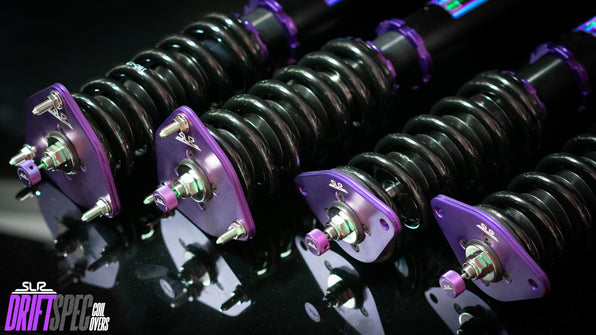
This vastly increased capability gives the pilot with exponentially more authority during a angle, allowing it to be much easier to initiate a drift, maintain it through a extended turn, and switch seamlessly from one angle to the other. The contrast in handling is truly profound. Combined with a appropriately specified steering kit is the just as essential modification to the car's damping system. Store-bought or even high-end street coilovers are generally not intended for the particular and harsh needs of drifting. A dedicated pair of adjustable dampers is of utmost importance. These engineered coilovers feature specific damping rates and spring stiffness that are designed for the extreme weight transfer that is characteristic of drifting. When a driver initiates a slide, the car's weight is transferred rapidly to the outer of the turn. Correct performance suspension handle this shift in a predictable way, permitting the chassis to stabilize rapidly and offering the driver precise response through the steering wheel and driver's seat. They additionally provide precise tuning of ground clearance, shock absorber stiffness, and corner weighting, which are all key elements of optimizing the vehicle's handling to a particular circuit or competition approach. Together, a precision-engineered steering angle kit and a expertly specified system of drift-spec adjustable dampers are the undeniable hardware foundation upon which all future tuning is constructed.
Once the essential hardware is in place, the following critical stage in the development is the precise tuning of the chassis's suspension geometry. This is the world of car suspension tuning, a procedure that can feel daunting to the uninitiated but is, in fact, the key to turning a collection of capable components into a cohesive and controllable whole. The most critical element of tuning for sliding is undoubtedly camber angle. Camber is the tilt of the wheel in relation to the vertical plane when looked at from the front-on of the chassis. When the top edge of the wheel is leaning inward, this is called inward tilt. In sliding, negative camber on the front tires is widely used and is considered critical. The logic is fundamentally linked to vehicle dynamics.
When a vehicle coilover setup tips is cornering at limit slip angles, the body leans toward the external of the corner. This body roll forces the outside front wheel to reduce its optimal grip area with the tarmac. By introducing negative camber, the tire is pre-leaned to account for this tilt. As the chassis tilts into the bend, the outside front tire gains a better contact patch with the track, increasing its grip at the precise moment when it is absolutely essential for directional command. Commonly, front angles for a dedicated drift car fall between approximately -3 degrees to as high as -5 degrees or even greater, depending on the specifics of the vehicle configuration, compound choice, and driver style. The rear axle tires also use inward lean, but the values are usually less and subtler than the front. Excessive inward lean at the rear can cause the vehicle to extremely prone to oversteer and hard to predict on acceleration input, as it shrinks the usable grip area of the driving wheels during linear power delivery. Therefore, rear camber settings are frequently in the ballpark of -1 degree to -3 degrees, achieving a precise balance between giving enough side bite to assist in initiating and maintaining the slide while also keeping effective traction for exiting the corner. alignment is just one element of the more complex tuning equation, which additionally encompasses toe angle, caster angle, and suspension-induced steering adjustment.
Toe setting is the direction of the tires when looked at from a bird's-eye view. Positive toe means the front edges of the tires are closer together than the rear edges, while toe-out means the reverse. For oversteer, a small amount of front toe out is frequently run to sharpen the initial response steering response, making the vehicle feel more nimble and ready to initiate a slide. Rear toe is generally set to neutral or a very slight amount of inward toe to promote predictability under acceleration. self-centering is the longitudinal or backwards inclination of the suspension tuning tool kingpin axis when observed from the side-on of the car. More caster increases steering feel and high-velocity solidity, and it also increases negative camber gain during turning, which is very advantageous. Setting these values is a detailed interplay where a change to one setting can and will influence the others. The old-school process for tuning a car's alignment for drifting has historically been a time-consuming process of trial and error. A driver or crew would introduce a adjustment based on a hunch, test the car on track, depend on the pilot's individual sensation and feedback, and then introduce a further tweak. This process would repeat over and over until the car felt "right" or the scheduled practice period ended. This system is not just incredibly inefficient in terms of hours and tires, fuel, and parts, but it is furthermore inherently imprecise.
Pilot perception is a notoriously subjective metric, influenced by many variables such as exhaustion, varying track surfaces, ambient heat, and simply the focus of the pilot on that specific run. What feels "tail-happy" on one pass might feel "pushing" on the following drift angle kits pass, leading to confusing feedback and ineffective changes. This long-standing problem in car suspension tuning is precisely where modern technology has stepped in to transform the landscape.
The advent and integration of specialized suspension tuning applications has ushered in a completely new age for tuning and perfecting professional drift cars. These tools, exemplified by innovative products like modern telemetry hardware, operate by physically recording the actual dynamic behavior of the car as it is piloted on the track. In contrast to using subjective feedback, these tools collect objective metrics on key variables such as suspension travel, corner velocities, lateral and longitudinal g-forces, wheel angle, and driver input application. This collected information flow is then interpreted by powerful algorithms that can plot and analyze the metrics in a clear manner. For the very first time, engineers and teams can observe precisely what the vehicle is exhibiting at each point of a lap. This function revolutionizes the entire suspension tuning process. Consider the specific challenge of dialing in the front negative camber for a given vehicle. As an alternative to applying a adjustment from -3 degrees to -3.5 degrees and then testing several laps to try and "feel" a difference, a suspension tuning tool can provide real-time and definitive information. The application can display graphically how the tire's loading is acting during the most important stages of a drift: initiation, holding the angle, and changing direction. It can show if the current camber setting is permitting the steering tire to keep optimal loading or if the rubber is over-stressed on its outer shoulder.
The tool can then suggest empirical recommendations for modification. Perhaps the telemetry shows that the outside front tire is still overloading its sidewall at -3.5 degrees of camber, implying that an increase to negative camber, say -4 degrees, might be warranted. On the other hand, the information might indicate that the tread is not coming up to optimal operating temp or that the inner edge is wearing too quickly, which could indicate that there is too much inward lean and a slight decrease back to -3.2 degrees would be more ideal. This level of accuracy and practical intelligence was completely unattainable in the time of pure manual tuning.
The effect of employing a comprehensive drift telemetry system extends well beyond only optimizing camber angles. It functions as an invaluable suspension tuning guide that is specific to your exact vehicle. When setting the rebound and compression clickers on your coilovers, instead of depending on general advice or copying another team's numbers, you can employ the telemetry to see how the car is reacting in reaction to your tweaks. The software can show the damper movement path over a section of track, highlighting if the dampers are controlling the body movement properly or if they are causing the vehicle to become unsettled uncontrollably after a transition. It can help in diagnosing problems like excessive compression or excessive extension, permitting you to introduce data-backed adjustments to helper springs, rebound/compression values, or stance. This approach translates just as well to the intricate process of suspension geometry optimization. Beyond camber, the system can offer analysis into how adjustments to toe and caster are affecting the chassis's handling during various phases of a drift. For instance, it can help you to ascertain the optimal amount of front toe out for your specific steering rack setup and piloting style by showing the speed of turn-in response and the predictability of the chassis at maximum steering angle. This turns the system an extremely useful vehicle dynamics manual that is constantly updated by the real-world dynamics of your own vehicle on the circuit. It moves the complete process from a dark art into a methodical development procedure.
Additionally, the utility of a platform like GripDial is not confined to experienced teams with vast budgets. For the club-level competitor, it serves as an incredible equalizer. It practically gives the tuner with the analysis of a professional race engineer without the typical expense. It speeds up the tuning process by delivering definitive directions to problems that would traditionally take countless track days of trial and error to understand. A driver can understand how their individual vehicle reacts to different settings, gaining a more intuitive comprehension of car control in the journey. It furthermore opens up advanced chassis dynamics principles, allowing anyone with the drive to refine their car to achieve it in a structured and successful manner. This is notably important in a activity like sliding, where setup knowledge has traditionally been a closely guarded asset among professional drivers. In the modern era, that knowledge can be in the garage of any serious builder.
In summary, the process to constructing and dialing in the perfect high-performance drift car is a multi-faceted project that smoothly combines proven hardware principles with revolutionary data tools. It starts with the informed pick of a proven chassis, then built upon the application of critical competition parts like maximum-angle steering angle kits and properly selected drift-spec coilovers. The build then advances into the detailed realm of alignment optimization, where values like camber, toe, and caster are carefully set to suit the chassis's upgraded geometry and the pilot's personal style. Ultimately, and what truly distinguishes the contemporary approach from the old ways, is the use of a powerful drift telemetry software. This platform eradicates the guesswork and inefficiency of solely feel-based tuning by providing empirical, actual information on how the vehicle is truly behaving. It acts as an incredible suspension tuning tool, a comprehensive coilover setup manual, and a master vehicle dynamics tool. Together, this holistic philosophy ensures that all element of the drift machine—from the selection of the chassis to the most minute tweak on the coilover—is optimized for ultimate competitiveness on the track. It represents the total progression of the discipline of drifting, merging physical driving skill with data-informed chassis dynamics to create the perfect competitive vehicles imaginable.